The thermostat says the house is comfortable, but the back bedroom feels several degrees warmer. Before lowering the setting again, look at what makes that room different. In Arizona homes, uneven cooling can involve sun exposure, insulation, ductwork, or the path air takes back to the system.
Notice when the room gets warm
A west-facing room that heats up late in the afternoon may have a different problem from a room that stays warm all day. Write down the time, whether the door is open or closed, and whether the AC is running. Note computers, exercise equipment, or other sources of indoor heat.
If you compare temperatures, use the same thermometer in each room and keep it away from direct sunlight and supply vents. Your thermostat measures conditions at its own location, not an average of every room. A hot room does not automatically mean the thermostat is broken.
Check the simple airflow restrictions
- Move furniture or curtains away from supply registers and return grilles.
- Make sure registers have not been accidentally closed.
- Inspect the filter and follow its replacement or cleaning instructions.
- Notice whether the room improves with the door open, which can point to a restricted return-air path.
Do not remove doors or cut transfer openings yourself. Any permanent return-air change should be designed for the home. Our air filter guide explains how to choose a filter without assuming the most restrictive option is best for your equipment.
Resist closing vents in other rooms
Closing several vents to force more air into one bedroom can raise pressure in the duct system and reduce total airflow. It may create noise or make an existing problem worse. Leave balancing adjustments to someone who can measure the system rather than guessing at the registers.
Similarly, lowering the thermostat may overcool the rest of the house without correcting the warm room. It can be a temporary comfort choice, but it is not a diagnosis.
Look beyond the air conditioner
Long duct runs, disconnected or leaking ducts, damaged insulation, and poorly balanced branches can limit cooling at a distant room. A room over a garage or an addition may also have different insulation and cooling needs from the original house.
Window shading can reduce afternoon heat gain. For persistent problems, an assessment may need to include the building envelope as well as HVAC equipment. Stay out of hot attics and leave roof access, duct modifications, and electrical work to qualified professionals.
Ask for measurements before a replacement
A useful service visit looks at room airflow, return paths, duct condition, system performance, and the room's cooling load. Replacing the outdoor unit alone may leave an underlying distribution problem untouched. Oversizing the replacement can introduce different problems, including frequent on-and-off cycling.
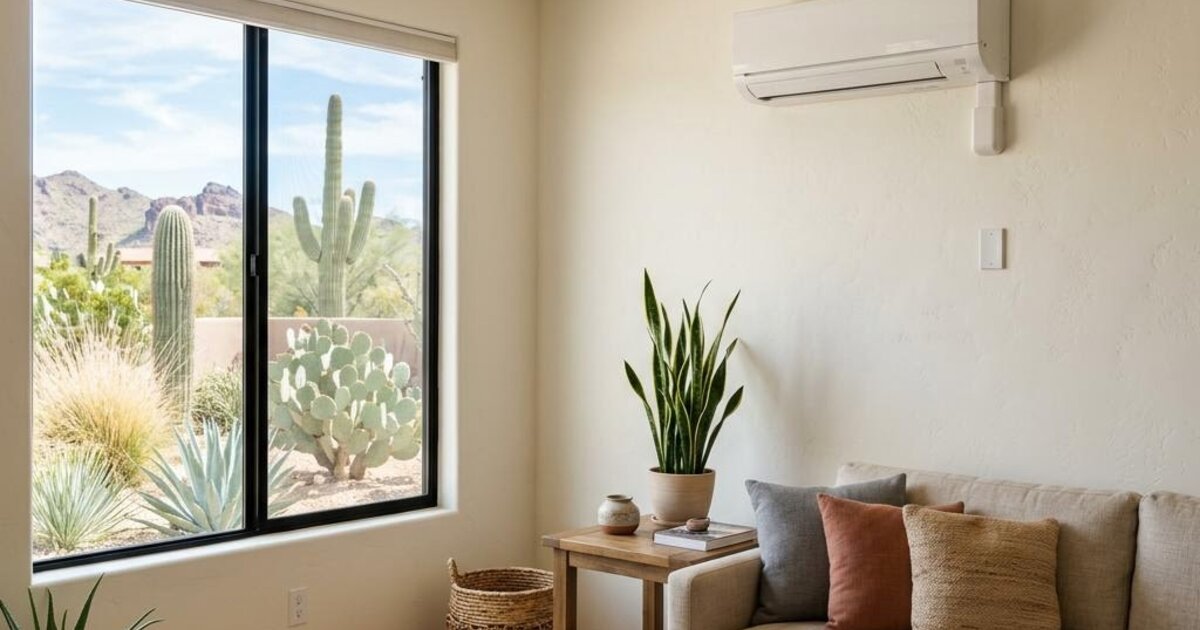
Sometimes a separately controlled system makes sense for an addition or space with different usage. A ductless mini-split is one option, but compare it with correcting insulation or duct problems first. For a separate garage, see our garage mini-split guide.
When to call for help
Book a visit if the problem is persistent, has suddenly worsened, or comes with weak airflow, ice, or unusual noise. If the whole house is struggling, our guide to an AC that is not cooling covers broader troubleshooting. A room-by-room symptom deserves more than an automatic recommendation for a larger system.
Get help with uneven cooling
HomeTown Air provides AC diagnosis and repair for Mesa and East Valley homes.