If we could get every homeowner in the East Valley to do one thing for their AC, it would be this: change the filter on time. It is the cheapest part of your entire system, and in our dust it does more to protect your cooling than anything else you can do yourself. Here is the desert version of the filter guide.
How often, really?
Forget the "every 90 days" printed on the package. That number was not written for a place with haboobs. For most Arizona homes we recommend:
- Peak summer (June to September): every 30 days. The system is running almost constantly and pulling dusty air through the filter all day.
- Spring and fall: every 30 to 60 days, sooner after a dust storm.
- Winter: every 60 to 90 days is usually fine.
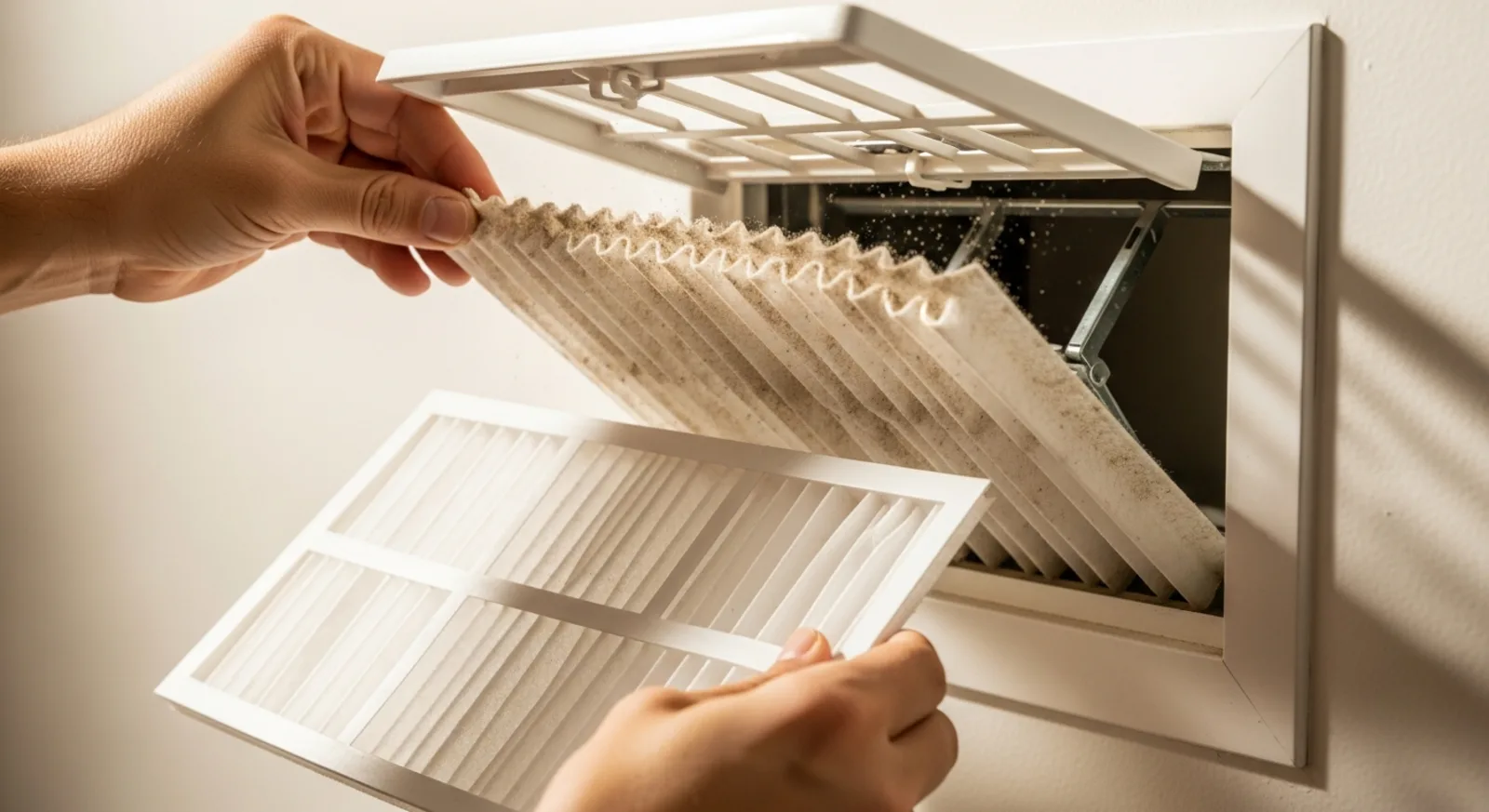
Change it more often if you have pets, allergies, a home near open desert or farmland, or anyone smoking indoors. The cheapest reliable test: pull the filter out and hold it up to a light. If light barely passes through, it is overdue.
MERV ratings without the jargon
MERV is simply a score for how fine a filter's net is. Higher numbers catch smaller particles, but they also make the fan work harder to pull air through. That tradeoff matters more here because our systems already run at full tilt all summer.
- MERV 1 to 4: the flat fiberglass throwaways. They protect the machine from large debris and not much else.
- MERV 8 to 11: the sweet spot for most Arizona homes. Pleated filters in this range catch desert dust and pollen without strangling airflow.
- MERV 12 to 13: good for allergy sufferers, and the practical ceiling for a standard 1 inch filter slot. Go this high only if you change it religiously, because it loads up with dust fast.
- Above MERV 13: hospital territory. Most residential systems cannot pull enough air through these without a dedicated media cabinet, and forcing it shortens equipment life.
Higher is not automatically better
A too-restrictive filter causes the same problems as a dirty one: weak airflow, longer run times, higher bills, and in bad cases a frozen coil. Match the filter to your system, not to the biggest number on the shelf.
What a dirty filter actually does to your AC
A clogged filter starves the indoor coil of airflow. The coil gets too cold, ice starts forming, and cooling drops while the system runs longer and longer. Many of the "my AC runs but the house will not cool" calls we get in July trace back to a filter that should have been changed in April. If that sounds familiar, our guide on why your AC is not cooling walks through what to check. The U.S. Department of Energy estimates that simply replacing a dirty filter can cut your AC's energy use by 5 to 15 percent.
Filter mistakes we see all the time
- Installing it backwards. The arrow on the frame points in the direction of airflow, toward the unit or duct, not toward the room.
- Wrong size. Gaps around an undersized filter let dusty air bypass it entirely and coat the coil.
- Running without a filter "just for a few days." In our dust, a few days is enough to start caking the indoor coil, and cleaning a coil costs far more than a year of filters.
- Forgetting extra return vents. Many East Valley homes have two or more return grilles, and each one has a filter.
- Buying one at a time. Buy a case. The filter you already have in the closet is the one that actually gets changed.
Set yourself up to actually remember
Write the date on the filter's cardboard edge with a marker when you install it, and set a repeating phone reminder for the first of the month during summer. If you would rather have a professional keeping an eye on the whole system, filters included, a maintenance plan pairs twice-yearly tune-ups with priority service when the valley heats up. More on what those visits cover in our guide to how often to service your AC in Arizona.
Protect the system behind the filter
Keep your cooling strong all summer
Fresh filters handle the day to day. Our seasonal tune-ups handle the rest, from coil cleaning to catching weak parts before they fail in the heat.
Bottom line
In the desert, change your filter every 30 days in summer, stick to a quality pleated filter around MERV 8 to 11 unless allergies push you higher, and make sure it is the right size, facing the right way. It is a five dollar habit that lowers your bills, keeps your air cleaner, and adds years to the most expensive appliance in your home.