Few things are more stressful than an air conditioner that is humming along but leaving your house warm on a 110 degree afternoon. The good news is that most no-cooling calls we get across the East Valley come down to a short list of usual suspects. Here is what is most likely going on, what you can safely check on your own, and when it is time to call a licensed technician.
Start here: rule out the simple stuff
Before you assume the worst, take two minutes to confirm the basics. These are the things we see homeowners overlook, and any one of them can make a perfectly healthy system act like it is broken.
- Thermostat settings. Make sure it is set to COOL and the fan is on AUTO, not ON. With the fan stuck on ON, the blower runs even when the system is not actively cooling, which feels like warm air coming from the vents.
- The breaker. An AC has two breakers in most homes, one for the indoor air handler and one for the outdoor unit. A tripped breaker on the outdoor unit means the fan inside runs but no cold air is made.
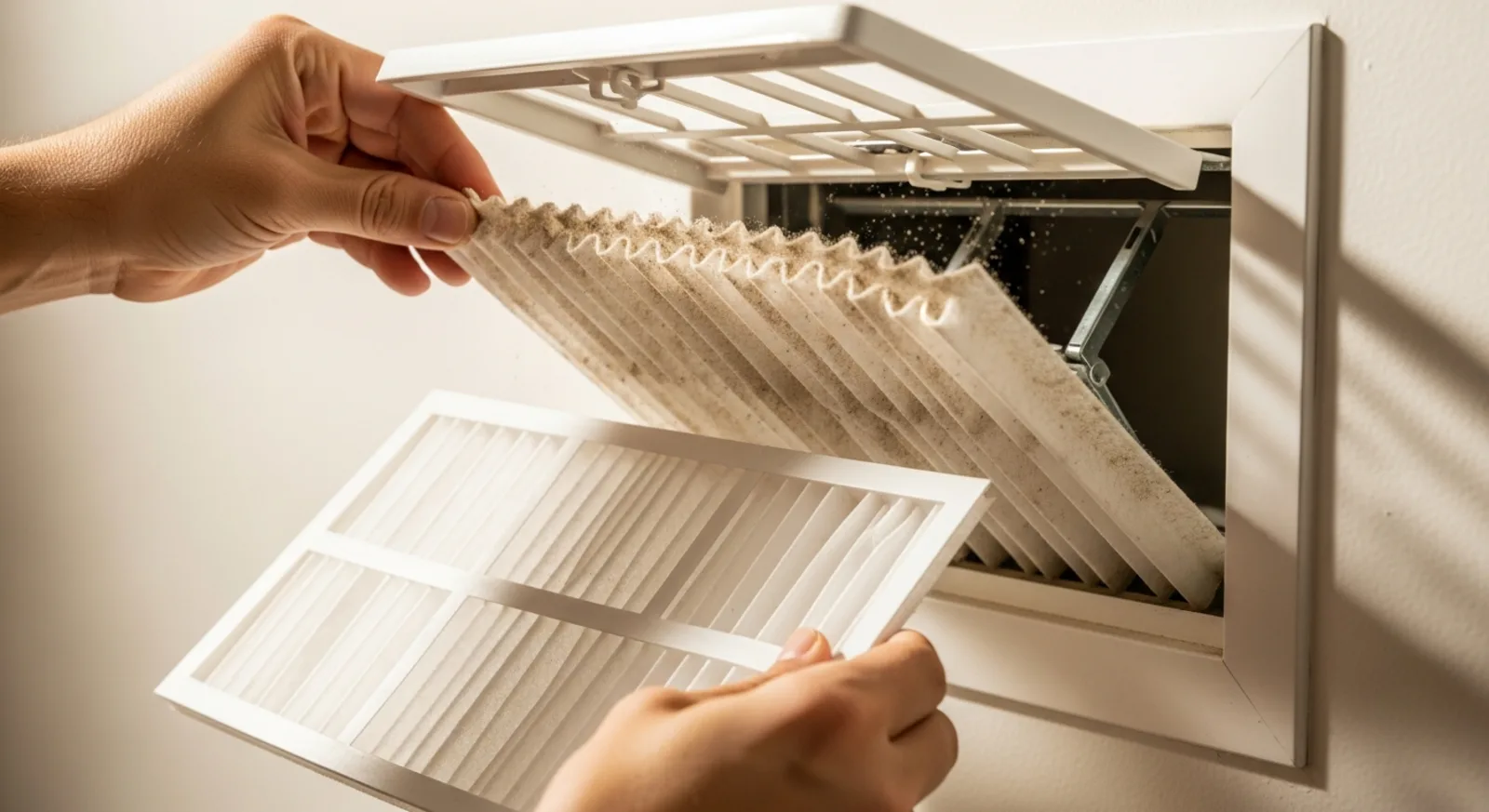
- The air filter. A filter packed with Arizona dust is the single most common cause of weak airflow and poor cooling. If you cannot remember the last time you changed it, that is your first clue.
The most common reasons an AC stops cooling in Arizona
If the basics check out and the house is still warm, one of these is usually the reason. Several of them are made worse by our extreme heat and dust.
- A clogged air filter or blocked vents. Restricted airflow chokes the system. It cannot pull enough warm air across the coil to cool it, so very little cold air comes out.
- A frozen evaporator coil. It sounds backwards, but low airflow or low refrigerant can cause the indoor coil to ice over. Once it is a block of ice, the system blows warm or barely-cool air. If you see frost on the copper lines or the indoor unit, shut it off.
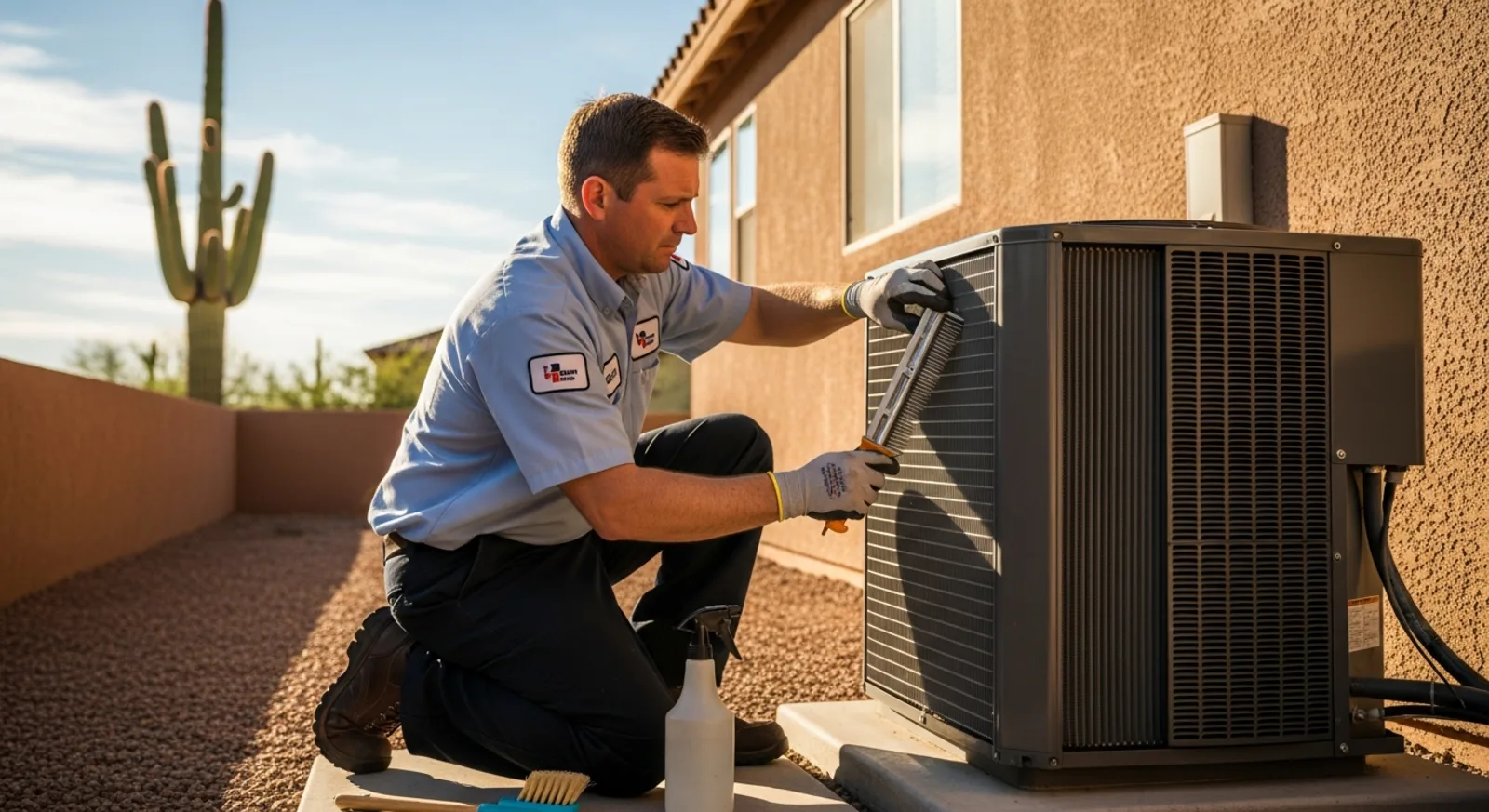
- A dirty outdoor condenser coil. The outdoor unit is how your AC dumps heat outside. When the coil is caked with dust, cottonwood, or landscaping debris, that heat has nowhere to go and cooling drops off fast.
- Low refrigerant from a leak. Your AC does not burn through refrigerant, so if it is low, there is a leak. This is a common cause of an outdoor unit that runs constantly while the house stays warm. It is also not a do-it-yourself fix.
- A failed capacitor. Capacitors are the small parts that start your fan and compressor, and Arizona heat is brutal on them. A bad capacitor can leave the outdoor fan spinning while the compressor refuses to start, so no real cooling happens.
- Leaky or undersized ductwork. If cool air is leaking into your attic before it reaches your rooms, you pay to cool the space above your ceiling. This often shows up as some rooms cooling fine while others never catch up.
- A system that is simply worn out or undersized. An aging or too-small unit can keep up in spring and then fall behind the moment we hit triple digits. If your AC only struggles on the hottest days, this may be the story.
Why our heat makes everything worse
A system that would limp along for years in a milder climate gets pushed to its limit here. Our units run thousands of hours against 110 degree heat, dust loads up coils and filters quickly, and a small problem that would stay hidden elsewhere turns into a no-cooling call on the worst possible afternoon. That is exactly why staying ahead of it with regular service pays off in Arizona.
What you can safely check yourself
A few of these you can handle without any tools or risk. The rest of the list belongs to a technician with gauges and training.
- Set the thermostat to COOL and the fan to AUTO, then drop the temperature a few degrees and listen for the outdoor unit to kick on.
- Replace a dirty air filter. In peak summer, plan on a fresh filter every 30 days because of how much dust we deal with.
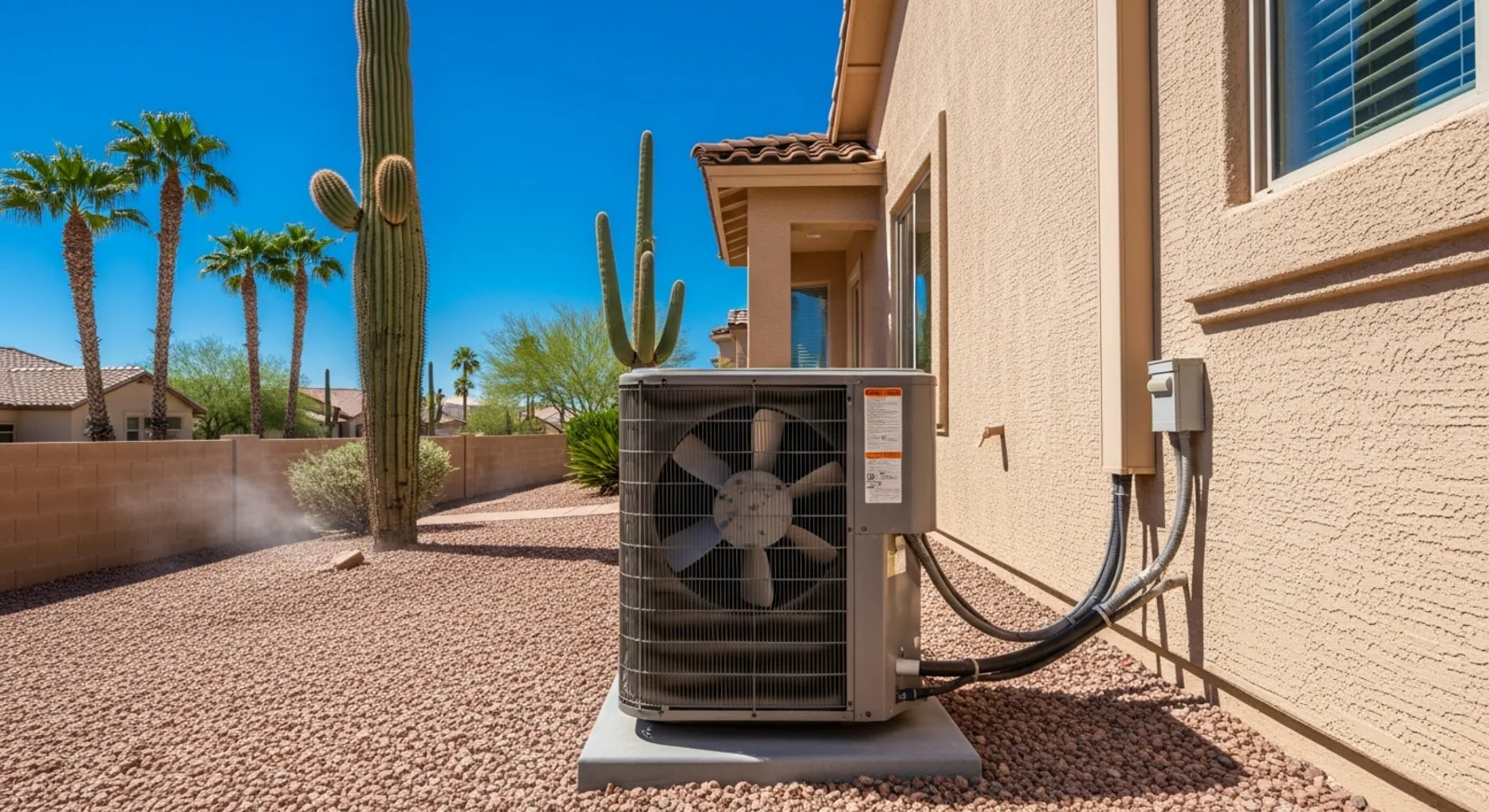
- Gently clear leaves, dust, and weeds from around the outdoor unit so it has room to breathe. Keep at least a couple of feet clear on all sides.
- Check both breakers. If one keeps tripping, stop resetting it and call a pro, because that is a sign of an electrical problem, not a fluke.
- If you find a frozen coil, switch the system to OFF and set the fan to ON to help it thaw. Once the ice is gone, the underlying cause still needs to be found.
When it is time to call a technician
Some problems are not safe or practical to chase on your own, and trying can turn a small repair into a big one. Call a licensed pro when you run into any of these:
- The coil keeps freezing up, or you suspect a refrigerant leak. Handling refrigerant requires EPA certification, and the EPA regulates who can work with it for good reason.
- A breaker trips repeatedly, you smell something burning, or the unit hums but will not start. These point to electrical or capacitor and compressor issues.
- The outdoor unit runs nonstop and the house never reaches the set temperature, even after you have changed the filter and cleared the unit.
Not sure whether you are looking at a quick fix or a bigger bill? Our guide to AC repair costs in Mesa walks through the most common repairs and real price ranges. And if your system is over 10 years old and this keeps happening, it may be worth reading when to replace your AC in Arizona before you spend more on repairs.
Same-day diagnostics
Warm house? Let us find the real cause
Same-day AC repair across Mesa and the East Valley, with honest diagnostics, up-front flat-rate pricing, and no after-hours surcharge.
Bottom line
When your AC runs but will not cool, start with the thermostat, the breaker, and the filter, since those solve a surprising number of calls. After that, the usual culprits are a frozen or dirty coil, low refrigerant, or a tired capacitor, and most of those need a trained set of hands. The faster you catch it, the less likely a warm afternoon turns into a full system failure. If you want a straight answer from a local team, we are a phone call away.