When you are buying a new air conditioner, the size question matters more in Arizona than almost anywhere else in the country. Get it right and your home stays comfortable for less money. Get it wrong and you can end up with a system that short cycles, wears out early, or simply cannot keep up in July. Here is how sizing actually works and how to land on the right number for your home in the East Valley.
What AC size actually means
AC size is measured in tons, and it has nothing to do with weight. One ton equals 12,000 BTU of cooling capacity per hour. Residential systems usually run from about 1.5 tons up to 5 tons, often in half-ton steps. A bigger number means more cooling capacity, not a physically larger box.
The rule of thumb, and why it is only a starting point
A common national rule is roughly one ton of cooling for every 500 to 600 square feet. In our climate, that ratio tightens because the system has to fight so much more heat, so Arizona homes often need somewhere around one ton per 400 to 500 square feet. As a rough planning guide only:
- About 1,200 to 1,500 sq ft: often in the 2.5 to 3 ton range
- About 1,500 to 2,000 sq ft: often in the 3 to 4 ton range
- About 2,000 to 2,500 sq ft: often in the 4 to 5 ton range
Treat these as ballparks, not a recommendation. Two homes the same size can need different systems depending on insulation, windows, and sun exposure, which is exactly why a rule of thumb should never be the final word.
Bigger is not better
It is tempting to oversize "just to be safe," but an AC that is too large cools the air fast and shuts off before it removes humidity or evenly cools the house. That is called short cycling, and it leads to hot and cold spots, higher bills, more wear on the equipment, and a shorter lifespan. In cooling, the right size beats the big size every time.
Why a Manual J load calculation is the real answer
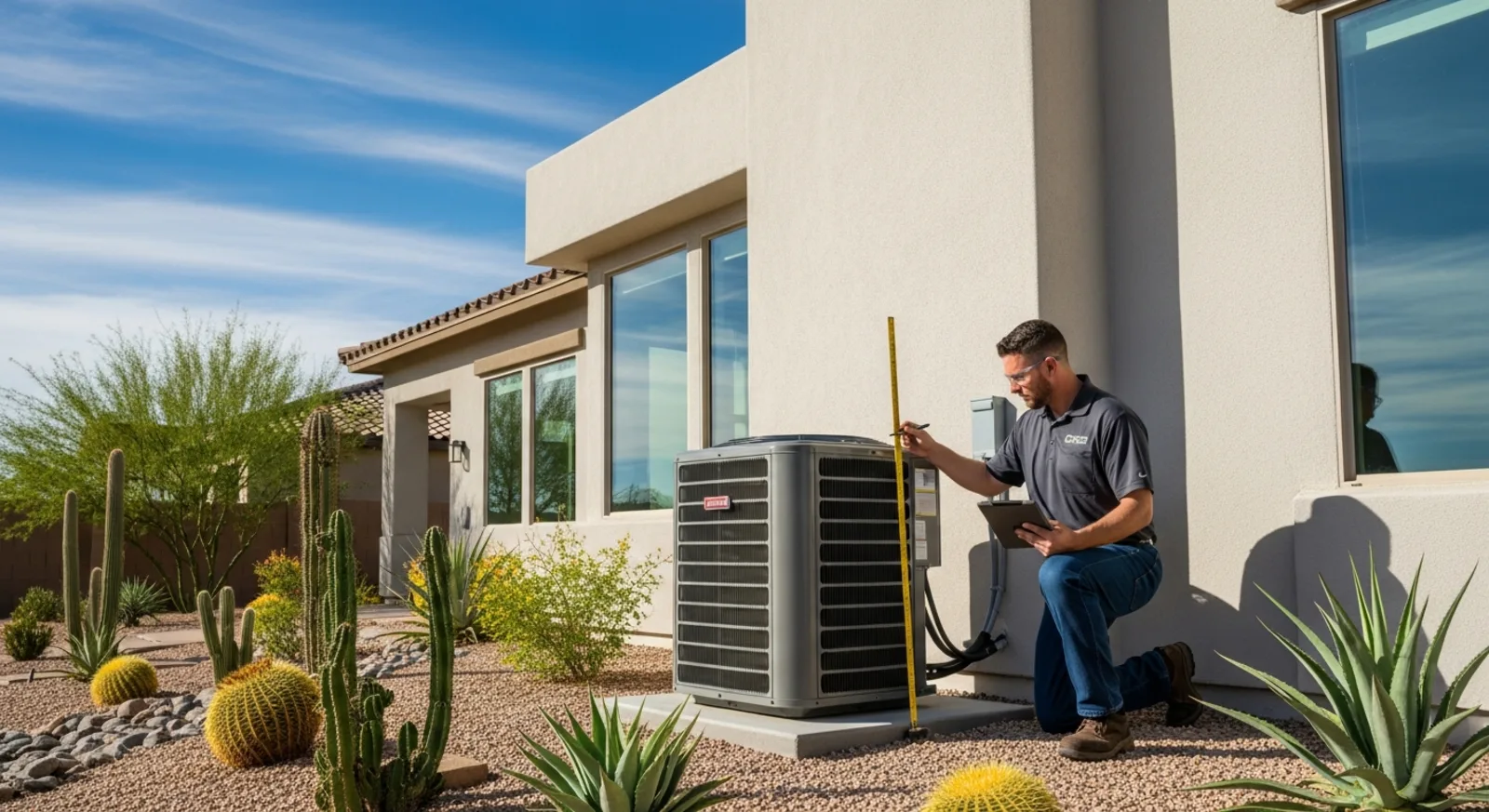
The proper way to size a system is a Manual J load calculation, the industry standard developed by the Air Conditioning Contractors of America. Instead of guessing from square footage, it calculates how much heat your specific home actually gains, so the system is matched to your house rather than a generic chart. The U.S. Department of Energy also recommends having cooling capacity sized to the home rather than rule-of-thumb estimates.
What affects the size your home needs
A good load calculation looks at far more than floor area. The big factors in an Arizona home include:
- Square footage and ceiling height. More volume of air means more to cool, and many valley homes have tall ceilings.
- Insulation and air sealing. A tight, well-insulated home holds cool air and can use a smaller system than a leaky one.
- Windows and sun exposure. Large windows and west-facing rooms take on a lot of afternoon heat, raising the load.
- Ductwork. Leaky or poorly designed ducts waste capacity, so the system has to be larger to compensate, or the ducts should be fixed.
- Layout and shade. Single story versus two story, and how much shade your home gets, both change the math.
How to get a real number for your home
Start with a quick estimate, then confirm it with a professional. Our AC replacement cost calculator gives you a fast installed price range by home size and system type, so you can budget before anyone visits. When you are ready for an exact recommendation, a free in-home estimate with a proper load calculation is the only way to know for sure.
A new system is also a smart moment to think about efficiency, since a right-sized, high-efficiency unit may qualify for utility rebates and a federal tax credit. Before you buy, read our breakdown of Arizona AC rebates and tax credits for 2026.
Sized right, no pressure
Get the right system for your home
Free in-home estimates across Mesa and the East Valley, with a proper load calculation, honest recommendations, and no high-pressure sales.
Bottom line
AC size is measured in tons, and in Arizona the right size is the one matched to your specific home, not a number pulled from a square footage chart. Use the rule of thumb to get oriented, remember that an oversized unit is a real problem and not a safety margin, then confirm with a Manual J load calculation. Do that, and you get even cooling, lower bills, and a system that lasts. When you want a precise answer, we are a local phone call away.