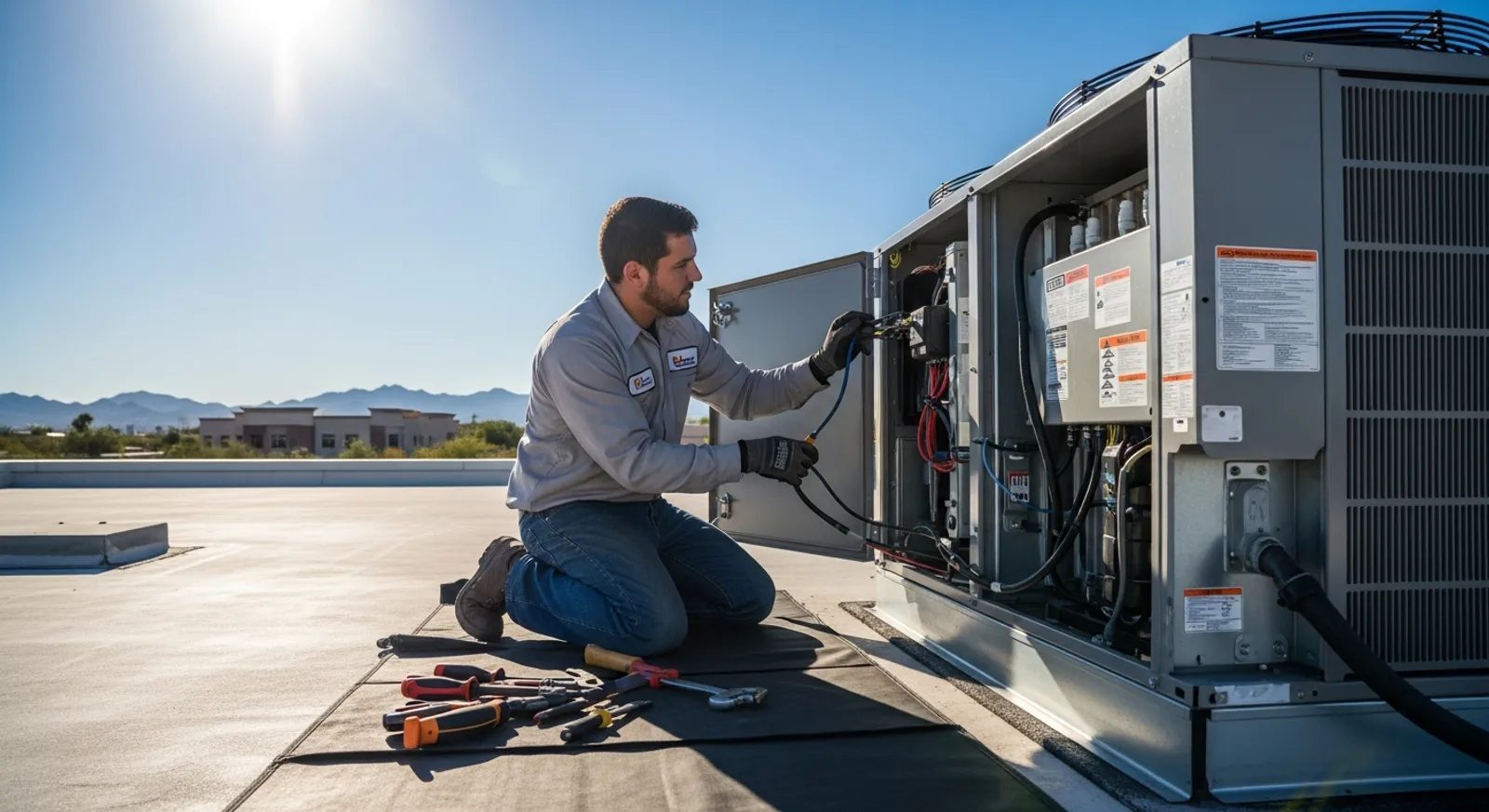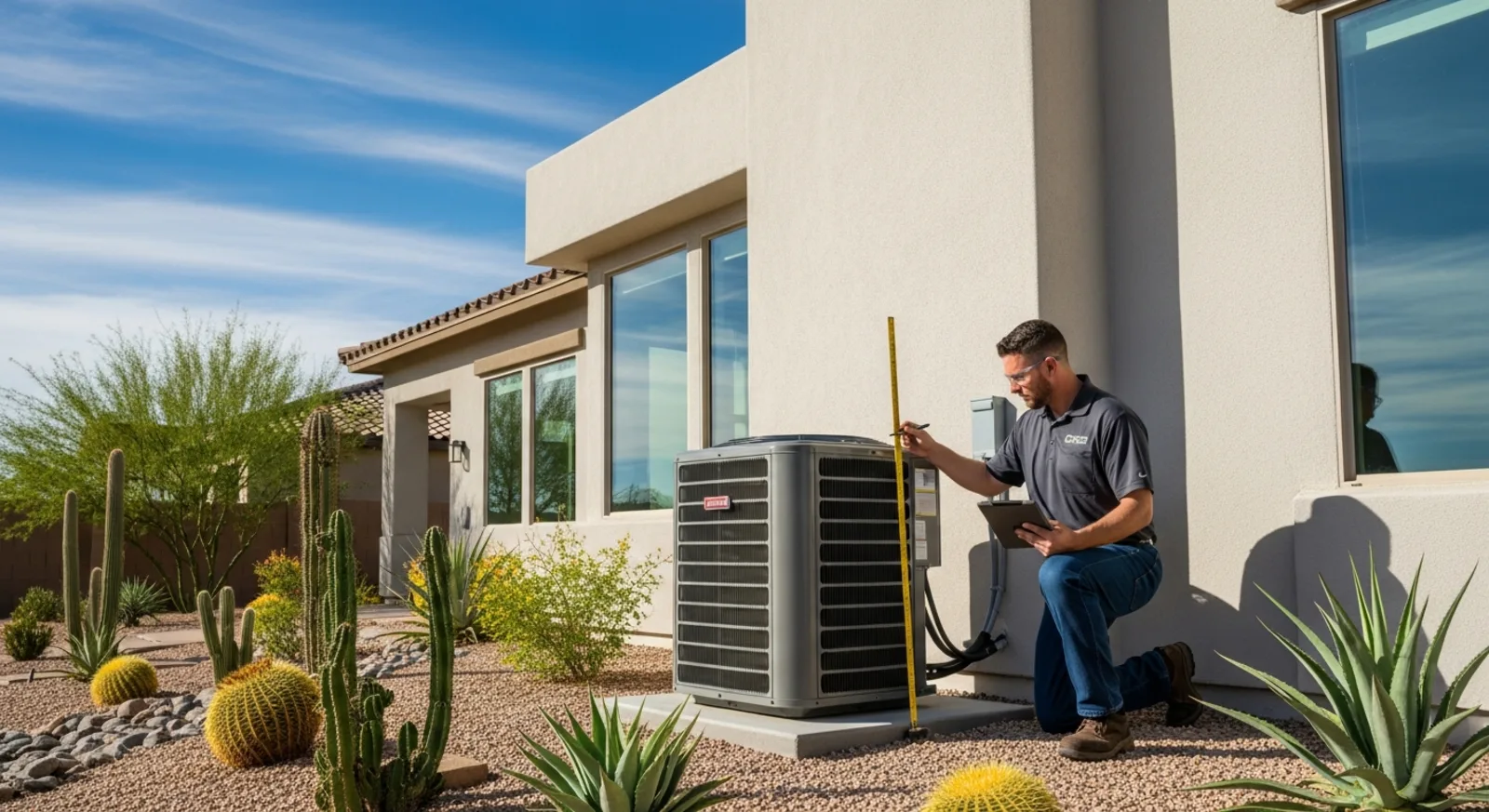
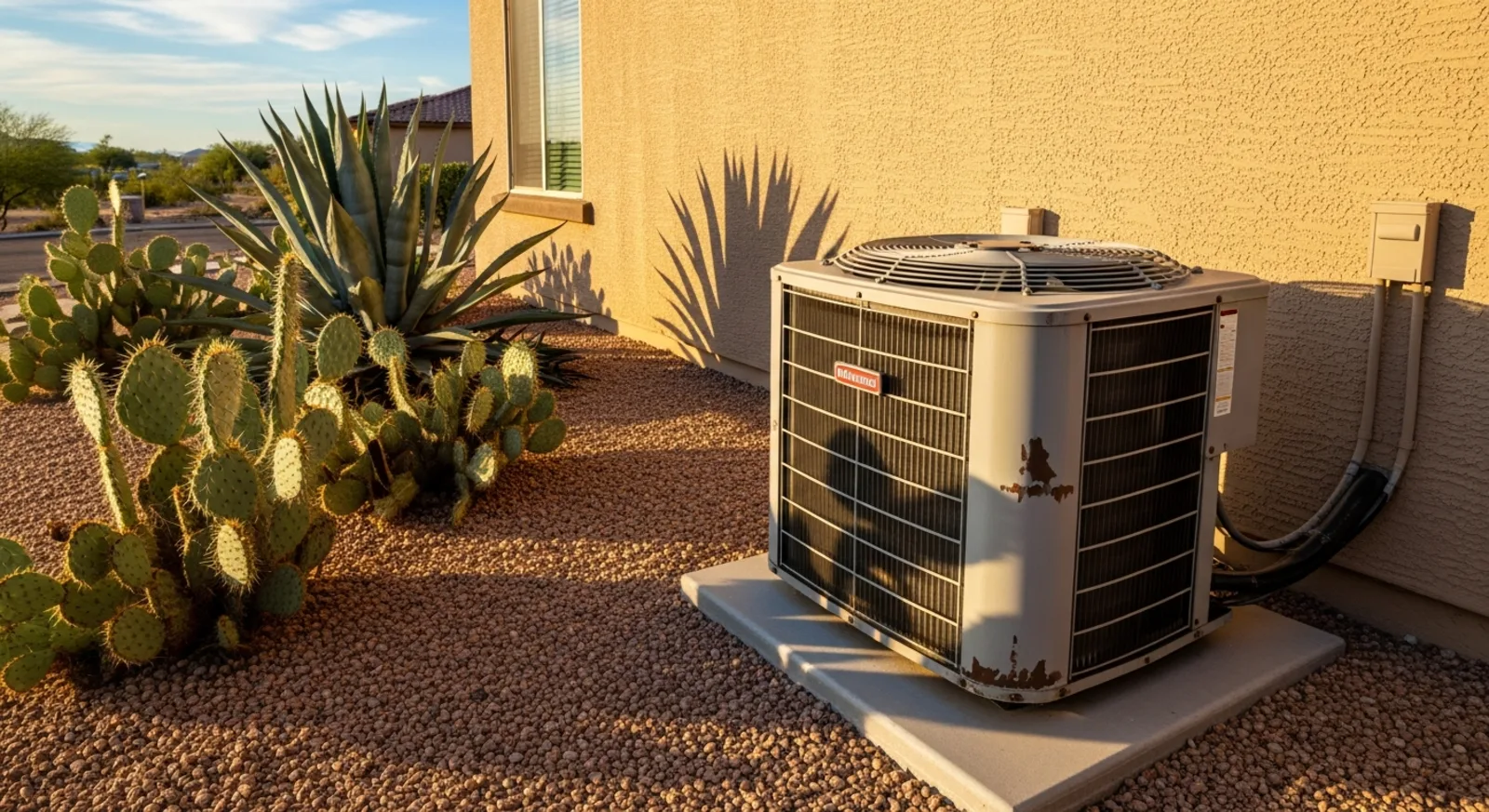
Ask this question almost anywhere in the country and you will hear 15 to 20 years. Ask it in Arizona and the honest answer is shorter. After decades of working on systems across Mesa and the East Valley, here is what we actually see, why our climate is harder on equipment, and what you can do to get every good year out of yours.
The short answer
In Arizona, a well-maintained central AC or heat pump typically lasts 12 to 15 years. A neglected one often fails at 8 to 10. A few pampered systems make it past 15, but planning on 20 years here is wishful thinking. The national averages you see online are built on climates where the AC naps for half the year. Ours does not.
Why our heat shortens the lifespan
Think of lifespan in run hours, not calendar years. A system in a mild climate might run 600 hours a year. In the Phoenix area, 2,000 or more is normal. That means an Arizona unit at year 10 has often worked as hard as a midwestern unit at year 20. A few local factors pile on:
- Extreme heat. Compressors and capacitors run hottest exactly when they are working hardest. Sustained 110 degree stretches are brutal on both.
- Desert dust. Fine dust cakes onto the outdoor coil and clogs filters, forcing the system to run longer for the same cooling.
- Sun exposure. Year-round UV bakes wiring insulation, refrigerant line insulation, and plastic components.
- Short break seasons. Cooling season here stretches from April into October, so parts simply get fewer months off.
Not sure how old your unit is? Check the serial number
Most homeowners inherit their AC with the house and have no idea what year it was made. The good news is the manufacture date is encoded in the serial number on the data plate, usually a metallic sticker on the side of the outdoor unit. Every brand formats it differently, so the easiest route is a free lookup tool like HVAC Checker, which decodes the serial number for more than 50 brands and tells you the manufacturing date and age in seconds. Knowing the real age changes every repair-or-replace decision that follows.
Age is not the whole story
A 12 year old unit that has been serviced every spring can be in better shape than an 8 year old unit that never saw a technician. Use age as a planning tool, not a verdict.
What actually extends an AC's life
- Regular maintenance. A yearly professional tune-up catches weak capacitors, low refrigerant, and dirty coils before they snowball into compressor damage.
- Fresh filters. A clogged filter starves the system of airflow and makes every component work harder. In summer, change it monthly.
- Correct sizing. An oversized or undersized system cycles wrong and wears out early. If you are replacing, read what size AC you need for an Arizona home before you buy.
- A clean outdoor coil. Keep plants, leaves, and debris a couple of feet away from the condenser so it can shed heat.
- Quality installation. More than any single part, a careful install with proper refrigerant charge and airflow setup is what separates the 15 year systems from the 9 year ones.
Signs your unit is on borrowed time
Rising energy bills, more frequent repairs, refrigerant leaks, rooms that never quite cool, and a unit that struggles on the hottest afternoons are all classic end-of-life signals. If yours is past 10 years old and showing any of these, it is worth reading our guide on when to replace your AC in Arizona and getting a real number for your home from our AC replacement cost calculator. Planning a replacement on your schedule always beats replacing in a panic during a July heat wave.
The repair-or-replace math
A rule of thumb we trust: multiply the repair quote by the age of the unit. If the result is higher than about 5,000, replacement usually makes more financial sense. A 400 dollar repair on a 6 year old system is an easy yes. A 1,200 dollar repair on a 13 year old system is money better put toward new equipment that will cool better and cost less to run.
Know where you stand
Get an honest read on your system's future
Whether your AC has years left or is running on borrowed time, we will give you a straight answer, not a sales pitch. Family-owned and serving the East Valley since 1999.
Bottom line
Plan on 12 to 15 years from an AC in Arizona, less if it has been neglected. Look up your unit's real age from the serial number, keep up with maintenance and filters, and start budgeting for replacement around year 10 so the decision is yours instead of the weather's. When you want a second opinion, we are a local phone call away.