
Every summer, usually from mid June through the end of September, the monsoon rolls into the valley with dust walls you can see coming from miles away. Those storms hit right when your AC is working its hardest, and the combination of fine dust, high wind, lightning, and power flickers is rougher on cooling equipment than most homeowners realize. Here is what actually happens to your system in a storm, and the simple routine we recommend to every customer in Mesa and the East Valley.
What a haboob does to your AC
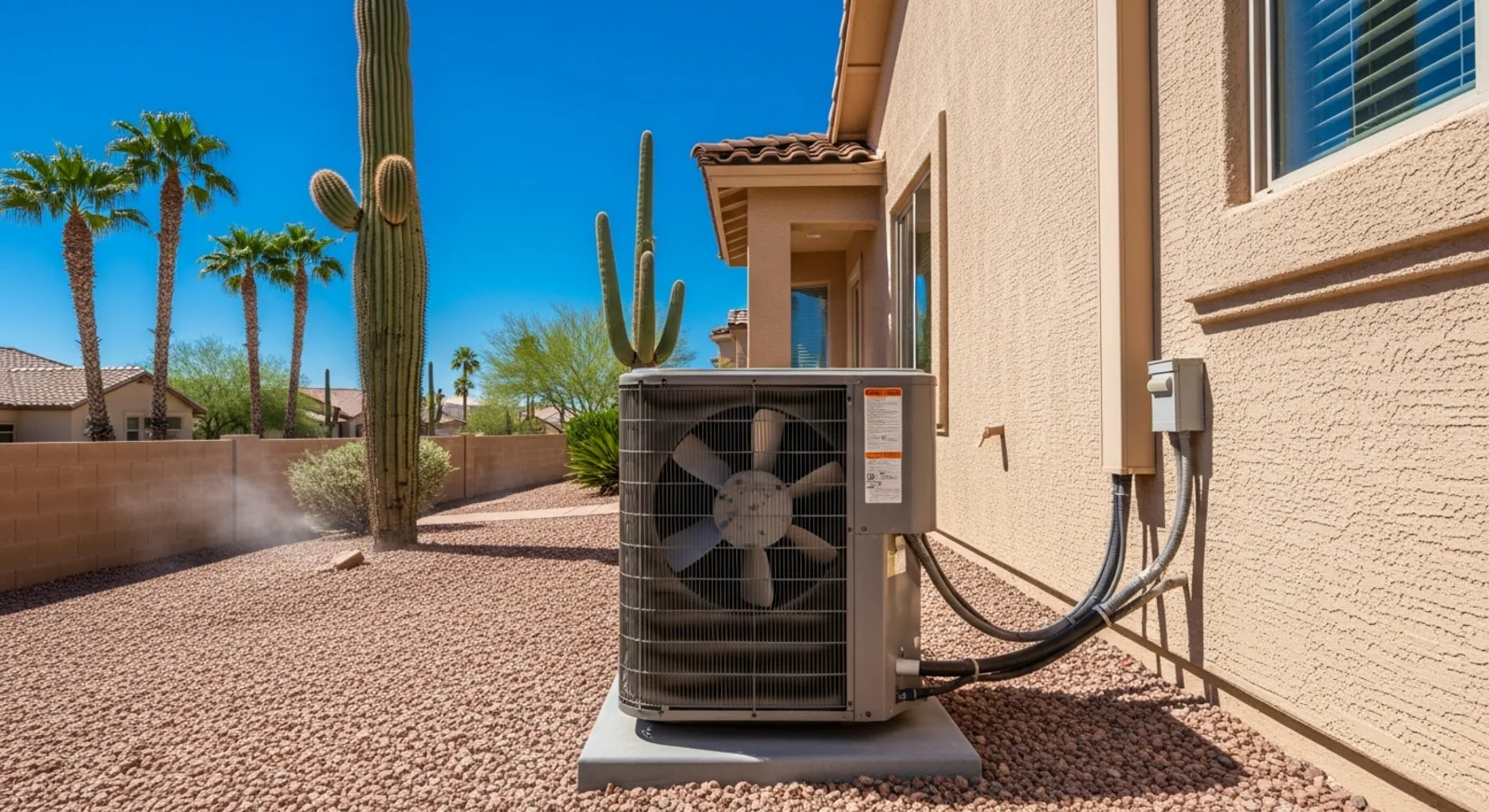
A dust storm is not just dirt blowing past your house. The National Weather Service notes that dust storms can arrive with winds strong enough to drive fine particles into every opening, and your outdoor condenser is essentially a giant air intake sitting in the path.
- Caked condenser coils. The outdoor unit sheds your home's heat through thin aluminum fins. A layer of storm dust acts like a blanket over them, so the system runs longer and hotter to do the same job.
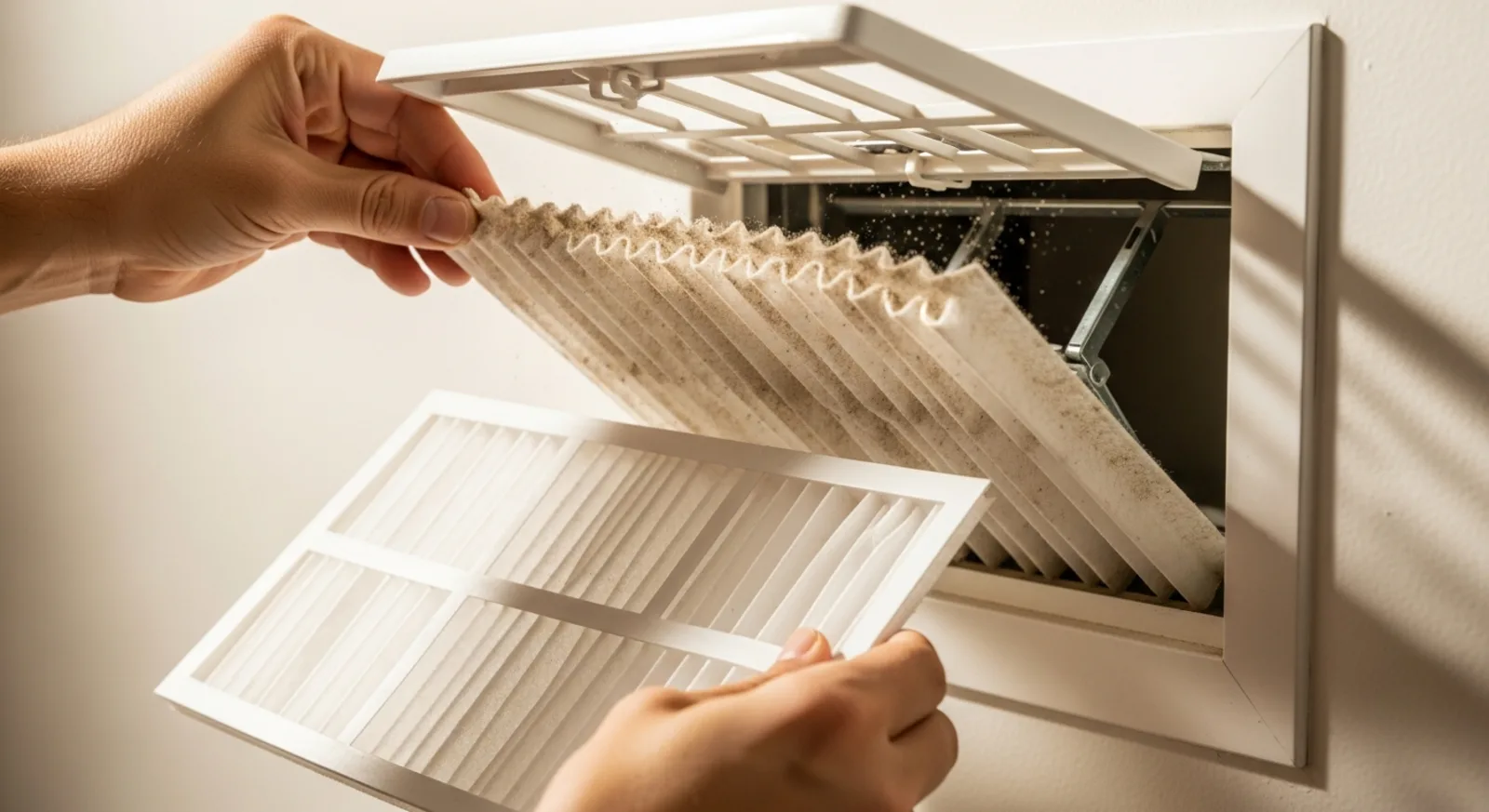
- Clogged filters, fast. A single haboob can load up an indoor filter that was fine that morning, choking airflow for days afterward if nobody checks it.
- Wind-blown debris. Palm fronds, leaves, and trash pile against the condenser and block airflow around it.
- Power surges and outages. Lightning and grid flickers are hard on compressors and circuit boards, and a brownout during peak load is one of the classic ways capacitors die.
Before the storms: a little prep goes a long way
- Get the pre-monsoon tune-up. A system going into July with clean coils, a strong capacitor, and a clear drain line has margin to absorb what the season throws at it. That is exactly what a professional tune-up checks.
- Consider surge protection. A whole-home or dedicated HVAC surge protector is cheap insurance for a compressor and control board that cost thousands to replace.
- Clear the area around the condenser. Secure patio furniture and trim plants so the wind has less to throw at the unit.
- Stock filters now. You will want a fresh one on hand after the first big dust event.
During a storm
You do not need to shut your AC off for dust alone. If lightning is directly overhead or your power starts flickering, turning the system off at the thermostat until the storm passes protects the compressor from rapid stop-start cycles and surge damage. After an outage, give it a few minutes before turning cooling back on so the refrigerant pressures can settle.
If the AC will not start after an outage
First check the breaker panel and the thermostat. If the breaker trips again after one reset, stop there and call a pro. Repeated resets into an electrical fault is how small problems become compressor replacements.
After a haboob: the 15 minute check
- Rinse the outdoor coil. Turn the system off, then gently rinse the condenser fins from top to bottom with a garden hose on low pressure. No pressure washers, they fold the fins shut.
- Clear debris. Pull leaves and branches away from the unit so it can breathe on all sides.
- Check the filter. Hold it up to a light. After a major dust storm, do not be surprised if it needs replacing early. Our desert air filter guide covers which filters handle our dust best.
- Listen and watch. New rattles, weak airflow, or warm air afterward mean the storm did more than cosmetic damage. Our guide on why an AC stops cooling helps you narrow it down.
When a post-storm inspection makes sense
If the unit took a direct hit from debris, sat through a long outage, or just is not cooling like it did before the storm, a professional inspection is worth it. We check the coil condition, refrigerant pressures, capacitor health, and electrical connections, the exact parts monsoon season attacks. It is a small visit compared to discovering compressor damage in August.
Storm season ready
Give your AC a fighting chance this monsoon
From pre-season tune-ups to post-storm inspections, we keep East Valley systems running through the worst the season brings. Family-owned and local since 1999.
Bottom line
Monsoon season is hard on equipment that is already running flat out. Go in with a tuned-up system and surge protection, shut things down when lightning is overhead or power gets shaky, and after every big dust storm give the coil a gentle rinse and the filter a look. Do that, and your AC will come out of September in far better shape than most. If a storm leaves yours struggling, we are a local phone call away.